
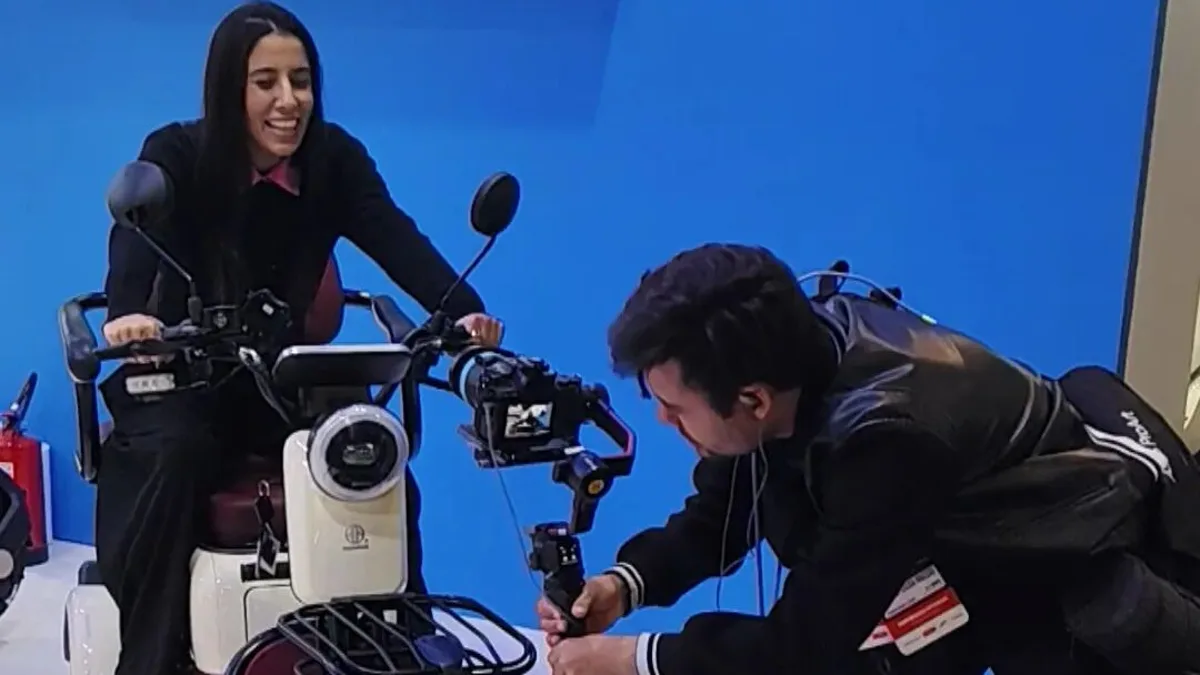
From June 22 to 25, 2026, Huaihai Holding Group made its first major South American brand appearance at Eletrolar Show 2026, exhibiting in the show's Future Mobility e-bike segment at Distrito Anhembi in São Paulo, Brazil. The booth presented seven models, with four named on-site: X3, EB1, JINY, and HL. The appearance was paired with pre-show market visits in Brazil, and booth photography shows the display included three-wheelers, with visitors seated on them while media filmed.
An appearance of this kind establishes presence and display, nothing more. It does not establish which models will be offered in the region, at what specification or price, under which registration treatment, through which partners, or on what timeline. None of the four named models has a publicly confirmed body category from this event, so an evaluation file should record the names without assuming which of them are three-wheelers. What the debut does provide is a dated market-entry signal: the brand spent money to be seen in South America, which makes a disciplined local evaluation worth opening — and nothing further.
For a South American importer running passenger-mobility showrooms — picture a Brazilian operator whose walk-in customers include older riders and family users — the useful question is narrow: what would a structured evaluation look like before any commitment?
Open an evaluation file, not a purchase plan
Start a dated file the day the show closes. Record what was physically observed at the booth, what staff said, and what remains unconfirmed, in three separate columns. A photographed vehicle, a sit-down try, and a brochure line belong in different columns; only the first is evidence.
Write down the questions the booth could not answer: exact configurations intended for the region, documentation each unit would ship with, and who handles technical questions after a sale. Keep model names tied to photographs, because a name heard at a busy booth is easy to attach to the wrong vehicle.
Draw a short route your showroom can repeat
When a demonstration or display unit becomes available, give it a fixed loop of fifteen to twenty minutes that starts and ends at the showroom. A workable loop touches smooth pavement, a patched or uneven stretch, a speed bump or ramp, a gentle slope, and one tight turning or parking maneuver, with one scheduled stop where a passenger boards and exits unhurried.
Run the same loop with different passenger types: a younger staff member, an older rider, two occupants together. The route is an observation instrument, not a road test or a legality judgment; it should stay on ground where the operator is entitled to run it, under local rules and qualified advice. One unit, one staff owner, and a written record per run will outperform a week of informal rides.
Score comfort with a fixed checklist
Fill the same checklist on every run, from the local unit only — booth impressions and show-floor minutes are not specifications:
- Ease of boarding and exit, including for older or less-mobile passengers.
- Seat position, backrest support, and legroom after a full loop, not after one minute.
- Vibration, rattles, and body noise over the uneven segment and speed bump.
- Handlebar reach, control effort, and low-speed turning behavior.
- Braking smoothness with a passenger aboard, and stability during the tight maneuver.
- Weather expectations for the local season: shade, rain coverage, and ventilation in heat.
- Storage and personal-item placement for shopping or school runs.
- Questions riders asked that staff could not answer from current documents.
The comfort model selection guide can help turn these observations into a model shortlist, but the checklist belongs to the importer's route, not to any brochure.
Test the support file before any trial order
A first regional appearance usually means the local support structure is still being built, so test it as part of the evaluation rather than after the purchase. Ask which wear parts and body panels could be supplied with a first order, what manuals and training exist for workshop staff, where warranty responsibility sits, and how technical questions are escalated across language and time zone.
The after-sales support pack gives a concrete frame for these questions, and the showroom and service plan connects them to staff readiness on the floor. If the comfort record is strong but the support answers stay vague, the correct position is to keep watching, not to fill a container.
Set the upgrade gate explicitly
Decide in advance what evidence moves the file from watching to a trial order: completed route records across passenger types, a written configuration and document set for the exact unit offered, and closed answers on parts, training, and warranty. Until all three exist, the evaluation continues and no stock commitment is made.
The June debut in São Paulo opened the conversation in South America. The importer's own route records and support answers — not the booth's foot traffic — decide what happens next.